The Unraveling
Chapter 1
The house was a warzone. A battlefield of whispers and shouts, and I was the prisoner of war, a child torn between two warring nations that were my parents. One day, I was my father’s son, a soldier in his army. The next, I was a confidante in my mother’s camp. The alliances shifted like sand, and I, a boy of no more than ten, was left to navigate the treacherous political landscape of my own home.
Chapter 2
My hair. It was a constant source of conflict. I remember the yellow bathroom, the cold tile on my bare feet as I stood on the step-up tub, my small frame reflected in the mirror. He was there, my father, his large hands gripping the brush, yanking it through my wild curls with a ferocity that made my scalp burn and my neck ache. He was trying to tame it, to force it into a neat side part, a style that was as foreign to my hair as peace was to our home.
“What the hell are you doing to him?!” My mother’s voice, sharp and accusatory, cut through the air. “His hair doesn’t go like that.”
“I’m brushing it like how hair should be brushed,” he retorted, his voice a low growl. The battle lines were drawn, and I was the contested territory.
Chapter 3
The fighting was a constant hum in the background of my childhood, a soundtrack of anger and resentment. Even my grandparents, who lived with us for half the year, communicated in arguments. My grandmother’s incessant requests were met with my grandfather’s booming replies, “I’m doing it now, you crazy old battle-ax!!” The air was thick with tension, a suffocating blanket of animosity that drove me into hiding.
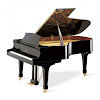
My father’s voice was a weapon, his words like bullets. He called me “mouse” because I was quiet, but my mind was a raging storm of thoughts, a chaotic symphony of fear and anxiety. The only escape was the piano.
Chapter 4
The piano was my sanctuary. A place of solace in a world of chaos. My dad had taught me the basics, the classic 1-4-5 progression of “In the Mood.” I would play it for hours, my ADHD-fueled hyper-focus allowing me to lose myself in the music. I would change the progression, experiment with new melodies, the possibilities as endless as my imagination. The piano was my only friend, the only thing that understood the turmoil in my heart.
Chapter 5
As the years passed, my father’s anger grew, a festering wound that never healed. The yelling was always followed by a smack, a stinging blow to my behind, my shoulder, my outstretched hand. The red, swollen welts were a testament to his rage, a physical manifestation of the emotional scars he was inflicting on me.
When I was thirteen, I made a promise to myself, my sister, and my mother. “I’m not going to let him hit me anymore.” My mother’s reply was a quiet, “Good, stand up for yourself.” It was the early 1980s, a different time, a different world.
Chapter 6
The day came, as I knew it would. He came home from work, his face a mask of fury. He started yelling, and I turned to walk away, to retreat to the safety of my room. He followed me, his footsteps echoing in the hallway, the dreadful grandfather clock a silent witness to the impending confrontation. My mom and sister watched from the kitchen, their faces a mixture of fear and hope.
I turned to face him, the smell of his brown leather jacket and Old Spice filling my nostrils. His hand went up, and in that moment, time seemed to slow down. I was trapped in a nightmare, my body paralyzed, my voice silenced. But then, with every ounce of strength I could muster, I twisted my body, stuck out my fist, and screamed, “YOU ARE NOT GOING TO HIT ME ANYMORE!!!”
Chapter 7
He stopped, his hand frozen in mid-air. He looked at me, then at his hand, as if he had just woken from a dream. The anger in his eyes was replaced by a look of confusion, of shock. He stood up straight, turned, and walked away. He never hit me again.
Chapter 8
His departure was as messy and scandalous as the life we had lived. A private investigator, a motel, an affair with my mother’s best friend, our next-door neighbor. The divorce was a public spectacle, a juicy piece of gossip for the very people who had once scolded me. Money was lost, or stolen, I never knew which. It was a chaotic end to a chaotic chapter of my life.
Chapter 9
The next time I saw him, it was to say goodbye to Nikko, my childhood dog, my best friend. He was 17, old and frail, his body ravaged by strokes and congestive heart failure. My father, the man who had caused me so much pain, stood in the foyer, his face etched with a sadness I had never seen before. In that moment, I almost felt for him.
We gathered around Nikko, our hands stroking his worn-out fur, our hearts breaking with every labored breath he took. Then, my father picked him up in his old, reddish, oval dog bed and drove him to the vet. It was our choice to end his suffering, but it felt like we were killing a part of ourselves.
Chapter 10
My childhood ended that day. The boy they called “mouse” died with Nikko. The innocence, the naivety, it all vanished, replaced by a cold, hard reality. But through it all, there was one constant, one unwavering presence in my life: the piano.
The middle C I played yesterday is the same middle C I played today, and it will be the same middle C tomorrow. In a world of chaos and impermanence, the piano was my anchor, my haven, my truth. And now, my mission is to share that haven with others, to guide them to the same solace I found in the music, to help them find their own song in the midst of life’s cacophony.